Health
The chemical question almost no one asks about the pan they cook with every day
A Michelin starred chef stopped using coated pans years ago. Here is what he says home cooks should look for on their own stove.

By Martin Odeu
Published September 18, 2026 6:30am
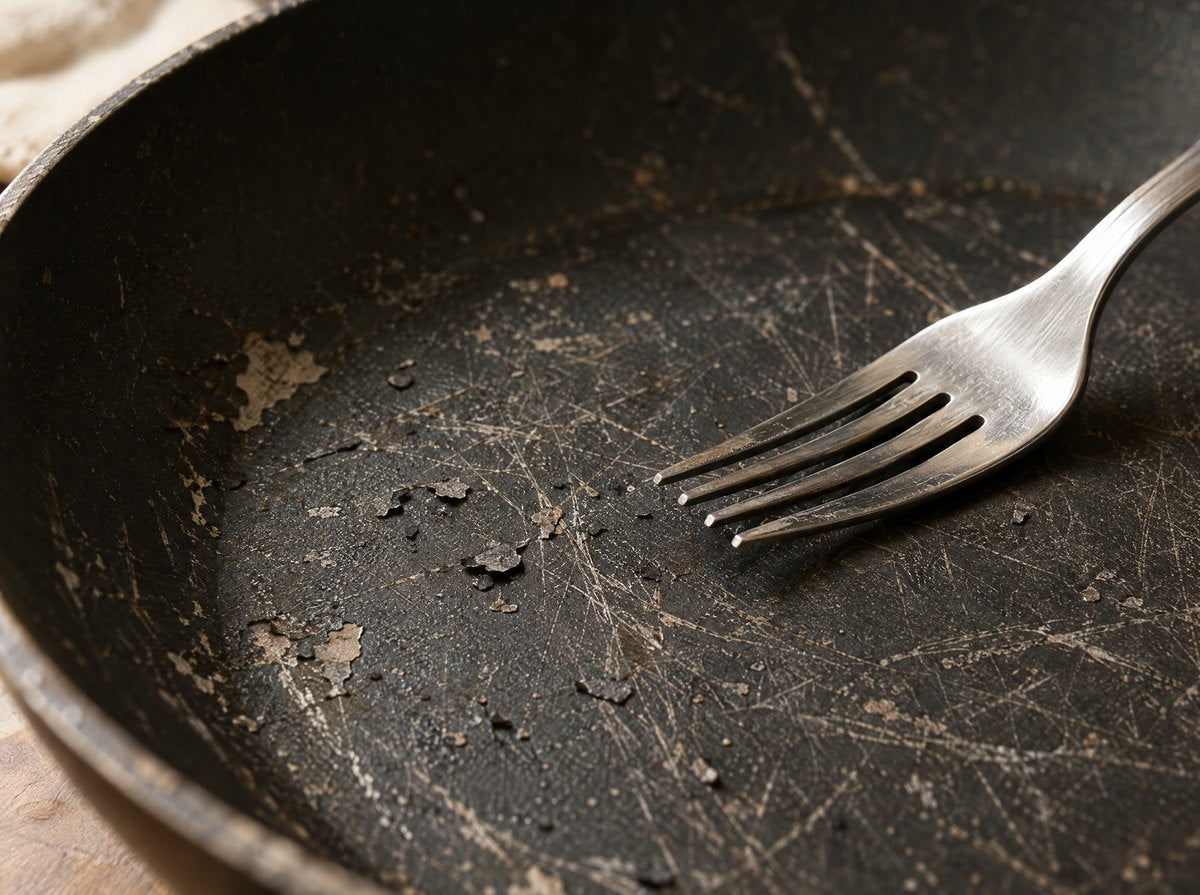
Most people never think about what their pan is made of until something makes them look. Then they look, and they can’t tell.
I spent fifteen years cooking in professional kitchens on every coating on the market, and somewhere along the way I stopped using coated pans altogether, first at work and then at home. It was never one dramatic moment. It was the same small thing over and over. A scratch near the edge where the spatula goes. A dull patch in the middle. A pan that used to release and suddenly doesn’t.
And every time, the same question I could never answer. A coating is a chemical layer by definition. It is applied to the metal rather than part of it, and anything applied like that comes off eventually, from heat, from a scratch, from time. The question was never whether it wears off. It was when, and where it ends up.
A woman asked me what I cook on at home, and then told me why she was asking
She had read a piece about forever chemicals on a Tuesday night. It wasn’t even about pans. It was a long article about things people had used for years without thinking twice, and cookware was one line in the middle of it. She checked her own pans that night anyway. Most of them were scratched. A couple were flaking a little around the edge, right where the spatula goes. Four years of cooking on them and she had never once looked that closely.
She spent the next week reading, and the frustrating part, she said, was that everything either told her to panic or told her not to worry, and nothing told her what was actually in the pan on her own stove. That is the question I get asked most, and it is a fair one. Nobody can tell you where a coating goes once it starts leaving.
She ordered a pan that week. What she told me months later had nothing to do with cooking. She had stopped checking the surface before she used it. No looking for scratches near the rim, no wondering whether tonight was the night a flake ended up in the sauce. That is the part I never expected people to notice, and it is the part they all mention.
How to tell in ten seconds what you are cooking on
You don’t need a lab for this. Walk to your stove, pick up the pan you use most, and look at four things.
-
1. Look at the surface
Smooth, shiny and slightly slick to the touch means a coating, and a coating is a chemical layer sitting between the metal and your food. Mine is hammered titanium, textured, with nothing sprayed on top.
-
2. Run a metal spatula across it
A coated pan scratches, and every scratch is a small opening in the layer that is supposed to keep things out of your food. Titanium marks like any metal does, but there is no layer to cut through, so a mark stays cosmetic.
-
3. Read what it is made of, not what it is called
Non stick, ceramic and granite are marketing words for a coating. Look for what the pan is actually made of. Mine says titanium, and that is the whole list.
-
4. Check what it says about heat
Most coated pans ask you to keep the heat low, because the coating starts to break down past a certain temperature and the fumes can make you feel properly unwell. Titanium takes a real sear without anything about the metal changing.
The pan I cook on, for your kitchen
No PFAS, no PTFE, no PFOA · 25 year warranty · 30 days to send it back
Normally €139,95 · from €69,00 · you save €70,95
Made in small batches · the sets go first
See availabilityFree shipping · Delivered in 1 to 3 working days · Pay in the checkout you know
Why people are switching for the health of it, not just the cooking
-
1. There is no coating to break down in the first place
Every non stick pan is fine until it isn’t. A scratch, a bit of overheating, and it starts shedding into your food. Titanium has nothing sitting on top of it to shed, because the surface is the pan.
-
2. No PFAS, no PTFE, no PFOA
These are the forever chemicals that build up in the body and don’t leave. PFOA was classed as carcinogenic to humans by the WHO cancer agency in 2023 and is already banned in Europe, and a wider European restriction on the rest of the family is being decided right now. My pan is solid metal, so there is nowhere for any of it to hide.
-
3. It doesn’t react with your food
Tomatoes, wine, lemon, anything acidic. None of it pulls anything out of the metal the way it can with older cast iron or a cheap pan. You can reduce a wine sauce in it without thinking about the pan at all.
-
4. It outlasts the question
You are not replacing it every two years and wondering what you have been cooking on in the meantime, because there is nothing left to wear out. There is a 25 year warranty on it, and I doubt most people will ever use it.
“The question was never whether the coating wears off. It was when, and where it ends up.”

Side by side
| What matters | Chez Martin | Coated pan |
|---|---|---|
| Coating | None, you cook on the metal | A chemical layer on top |
| PFAS and PTFE | Neither | Usually PTFE based |
| Metal utensils | No problem | Scratches the coating |
| High heat | Sear away | Keep it low |
| How long it lasts | 25 year warranty | One to three years |
The pan I cook on, for your kitchen
No PFAS, no PTFE, no PFOA · 25 year warranty · 30 days to send it back
Normally €139,95 · from €69,00 · you save €70,95
Made in small batches · the sets go first
See availabilityFree shipping · Delivered in 1 to 3 working days · Pay in the checkout you know
What it costs
-
One pan
€139,95€69,0026 cm, the one I reach for most -
Set of two
€279,95€119,0022 and 26 cm, where most home cooks start -
Complete set
€419,95€169,0022, 26 and 30 cm, every job covered
The complete set works out at €56,33 a pan instead of €69,00, and it is the only way to have the right size on the stove every time.
If it has ever kept you up
If reading about what is in your cookware has ever cost you a night of sleep, this is the fix. Not a promise about your health. Just one less question in a kitchen that already asks you plenty.
Go and look at the pan you use most. If the surface is smooth and slick, and there are scratches near the rim, you already know what you are looking at.
The pan I cook on, for your kitchen
No PFAS, no PTFE, no PFOA · 25 year warranty · 30 days to send it back
Normally €139,95 · from €69,00 · you save €70,95
Made in small batches · the sets go first
See availabilityFree shipping · Delivered in 1 to 3 working days · Pay in the checkout you know
This is a paid advertisement published by Chez Martin. Martin Odeu is the founder of Chez Martin and has a commercial interest in the product described here. It is not independent journalism.
