Food
The reason food sticks has almost nothing to do with how you cook
Every professional kitchen makes the same sound at every station: food hitting a hot pan, and nothing else. A Michelin starred chef explains why home kitchens rarely do.

By Martin Odeu
Published September 21, 2026 7:45am
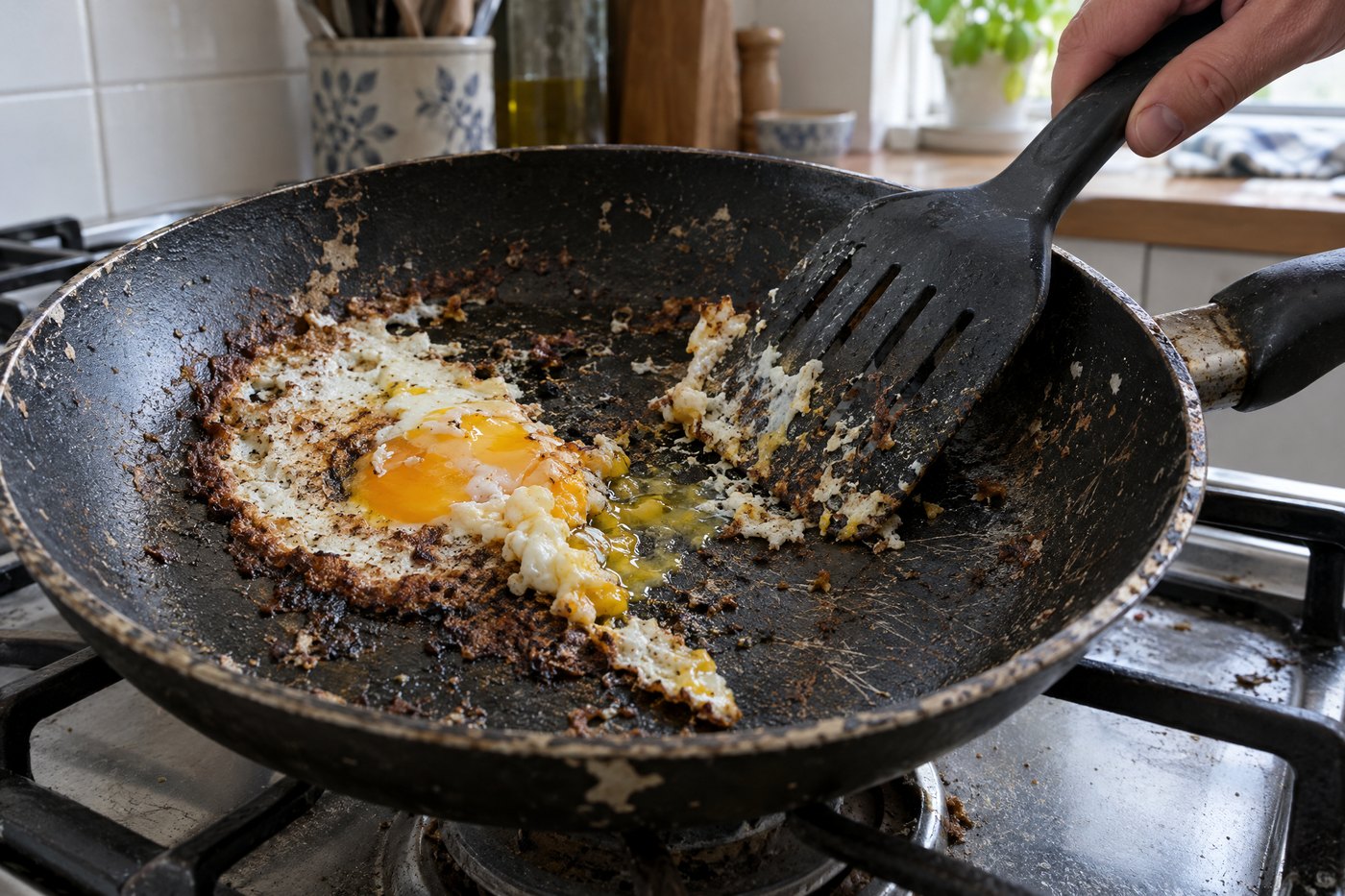
Walk through any professional kitchen during service and listen. Eggs that slide. A steak that releases the second it is ready. Vegetables that do not glue themselves to the bottom. No scraping, no swearing, no ruined dish.
At home it is usually the other way round, and people blame themselves for it. Wrong heat, wrong timing, not enough oil. In my experience it is almost never the cook. It is the pan, and more precisely the thin layer of chemistry that pan is relying on to do the work.
A coating stops food sticking, right up until it doesn’t. Then you are the one standing there with a fish fillet in two pieces.
The pan I cook on, for your kitchen
It releases without a coating · 25 year warranty · 30 days to send it back
Normally €139,95 · from €69,00 · you save €70,95
Made in small batches · the sets go first
See availabilityFree shipping · Delivered in 1 to 3 working days · Pay in the checkout you know
Why home cooks are switching for the way it cooks
-
1. The surface does the work, not a coating
Most pans rely on a chemical layer to stop food sticking, and that layer is doing everything. Mine is solid titanium, hammered by hand, so the texture itself releases food the way a professional pan does.
-
2. It doesn’t fade
A coating gets thinner every time you use it, until one day the egg simply doesn’t let go any more. Titanium does not wear down, so it cooks the same five years in as it did on the first morning.
-
3. You can actually cook on it properly
Coated pans tell you to keep the heat low, which means a weak sear on everything. This one takes real heat, so a steak browns and a fish fillet crisps the way it would on my own stove.
-
4. It takes a beating
Metal spatula, metal whisk, straight into the dishwasher. None of it matters, because there is no coating to scratch off in the first place.
“A coating is doing all the work, not the pan. Take the coating away and the pan has to be good enough on its own.”
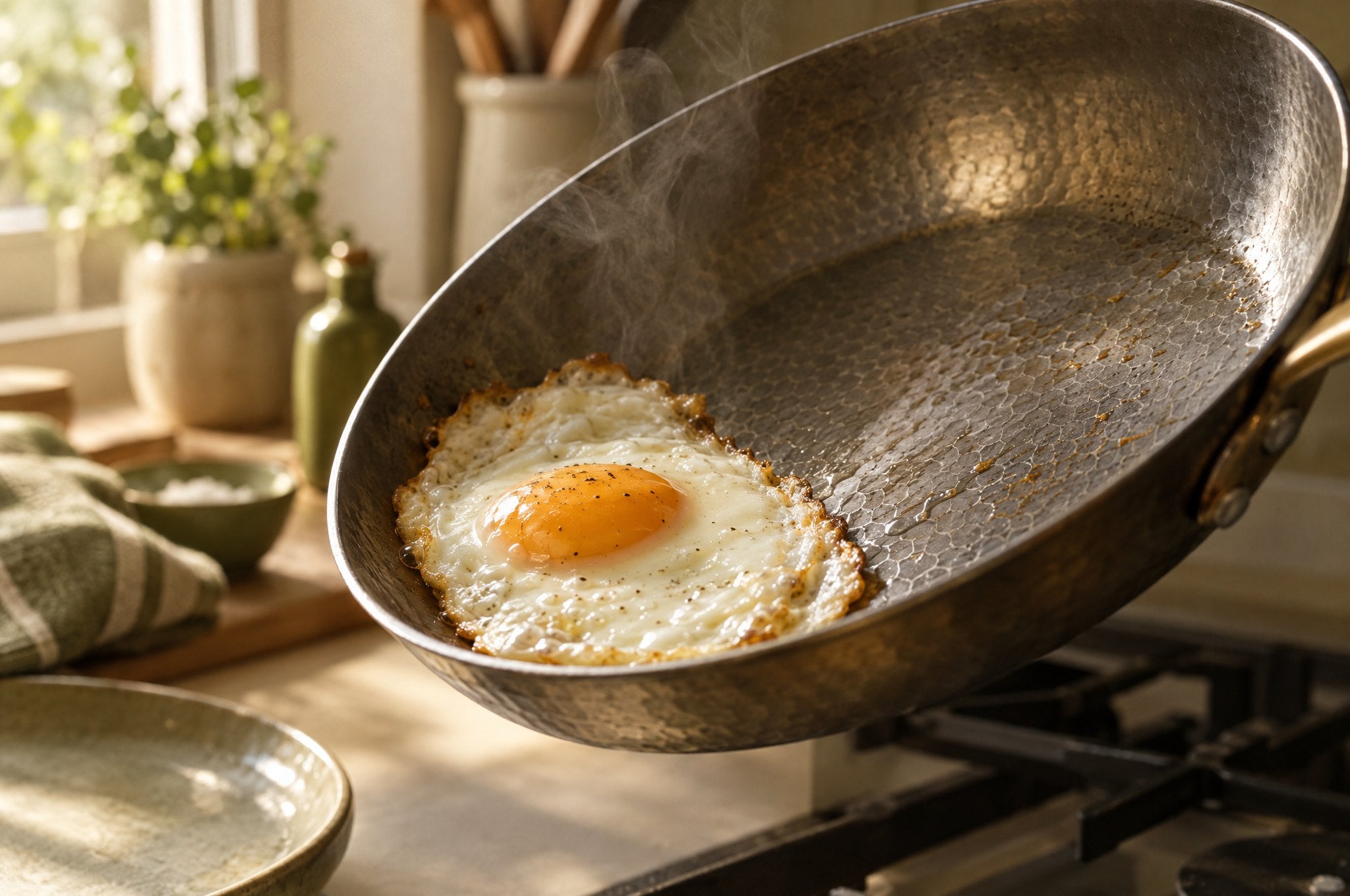
The dinner that made one home cook give up on coated pans
She cooked for her daughter’s engagement. Eleven people, a menu she had been planning for weeks, nothing complicated, just food she had made a hundred times. The scallops went out a little pale on one side because the pan did not heat evenly any more, but nobody said anything. The chicken was where it fell apart. Somewhere around the fourth batch everything started catching on the bottom, and she served half the table a sauce with little black flecks in it, hoping nobody would notice.
Her son in law noticed. He wasn’t unkind about it. He just asked, quietly, whether the pan was supposed to smell like that.
She replaced it that week with almost exactly the same pan, because that is what she had always used, and told herself it was a one off. Three months later the eggs stuck too, which had never happened before. That is when she actually counted how often she had been buying pans, and it was more than she wanted to admit. Here is the part I want you to take from it. It was never her cooking. It was a coating reaching the end of its life on the worst possible evening.
Getting food to let go, in one pan
Titanium is not a coating, so it asks slightly different things of you. Four of them, and none of them are difficult.
-
1. Give it a minute to heat up
Medium heat, one minute, no rush. Titanium holds heat well, so you rarely need it high. A properly warm pan is most of the job.
-
2. Use a little fat, not a lot
A touch of oil or butter is enough. Years of coated pans teach people to pour in far more than they need, and that is what ends up smoking.
-
3. Let the food tell you when to turn it
A steak or a fillet sticks slightly while the crust forms and releases by itself when it is ready. If it is fighting you, it is not done.
-
4. Use whatever tools you like
Metal tongs, a metal whisk, a hard scrape with a spatula. There is no layer to damage, so none of it shortens the life of the pan.
Side by side
| What matters | Chez Martin | Coated pan |
|---|---|---|
| What releases the food | The hammered metal itself | A chemical layer on top |
| After two years | Exactly the same | Thinning, then sticking |
| High heat | Sear away | Keep it low |
| Metal utensils | No problem | Scratches the coating |
| How long it lasts | 25 year warranty | One to three years |
The pan I cook on, for your kitchen
It releases without a coating · 25 year warranty · 30 days to send it back
Normally €139,95 · from €69,00 · you save €70,95
Made in small batches · the sets go first
See availabilityFree shipping · Delivered in 1 to 3 working days · Pay in the checkout you know
What it costs
-
One pan
€139,95€69,0026 cm, the one I reach for most -
Set of two
€279,95€119,0022 and 26 cm, where most home cooks start -
Complete set
€419,95€169,0022, 26 and 30 cm, every job covered
The complete set works out at €56,33 a pan instead of €69,00, and it is the only way to have the right size on the stove every time.
When to switch
If a dinner has ever gone sideways because of a pan that used to work and suddenly didn’t, that is the moment to switch. Not when the pan finally dies, but the first time it lets you down in front of people.
The first week you will probably still reach for too much oil. That is years of coated pans talking. Preheat it properly, use a little fat, and the metal takes it from there. After that the pan stops being something you think about at all.
The pan I cook on, for your kitchen
It releases without a coating · 25 year warranty · 30 days to send it back
Normally €139,95 · from €69,00 · you save €70,95
Made in small batches · the sets go first
See availabilityFree shipping · Delivered in 1 to 3 working days · Pay in the checkout you know
This is a paid advertisement published by Chez Martin. Martin Odeu is the founder of Chez Martin and has a commercial interest in the product described here. It is not independent journalism.
